
A concussion can result from a bump, blow, or jolt to the head, or from a hit to the body that makes the head and brain move rapidly. The word “mild” describes the usual initial severity, not the importance of the injury. Symptoms differ from person to person, may change during recovery, and sometimes do not appear until hours or days after the event.
This guide explains common concussion symptoms, emergency warning signs, what information to give a healthcare professional, and how to approach work, school, driving, exercise, and documentation after a possible head injury.
Emergency notice: Call emergency services or go to an emergency department immediately for worsening headache, repeated vomiting, seizure, increasing confusion, unusual behavior, slurred speech, weakness, numbness, poor coordination, unequal pupils, double vision, loss of consciousness, or increasing difficulty waking the injured person.
Recognize Concussion Symptoms and Dangerous Changes

No single symptom confirms or rules out a concussion. Some people experience several obvious problems immediately, while others notice only a mild headache or difficulty concentrating. A person does not need to be knocked unconscious to have a concussion. After any meaningful head impact or forceful jolt, pay attention to physical symptoms, thinking changes, emotions, behavior, and sleep.
Understand What a Concussion Can Look Like
Watch for physical, cognitive, emotional, and sleep symptoms
Physical symptoms can include headache, pressure in the head, dizziness, balance difficulty, nausea, early vomiting, blurred or disturbed vision, sensitivity to light or noise, fatigue, and low energy. Neck pain may occur at the same time, but a neck injury requires its own evaluation. Do not assume every symptom comes from the concussion.
Thinking and memory changes may be less visible. The injured person may feel foggy, slowed down, distracted, or unable to follow a conversation. They may repeat questions, forget events around the injury, lose track of tasks, or struggle to read and use screens. Friends or family may notice delayed answers or unusual mistakes before the injured person recognizes them.
Emotional and sleep-related changes can also develop. Anxiety, sadness, irritability, increased emotion, difficulty falling asleep, sleeping more, or sleeping less may occur. These symptoms can overlap with pain, stress, medication effects, and other conditions, which is one reason a professional assessment matters.
Write down when each symptom started and whether it is improving, stable, or worsening. Ask a trusted person to observe the injured individual during the first day, especially when symptoms are evolving. Avoid leaving a confused, very drowsy, or increasingly unwell person alone.
Know the danger signs that require emergency care
A possible concussion can be difficult to distinguish from a more dangerous brain injury without medical evaluation. Seek emergency care when a headache becomes worse and does not go away; vomiting repeats; a seizure occurs; speech becomes slurred; or weakness, numbness, or reduced coordination develops. Increasing agitation, restlessness, confusion, or inability to recognize people or places also requires urgent action.
Call for emergency help if one pupil becomes larger than the other, double vision begins, the person loses consciousness, becomes increasingly drowsy, cannot stay awake, or cannot be awakened. Do not drive a seriously symptomatic person yourself when an ambulance is the safer option. Follow emergency dispatch instructions while waiting.
Children may show symptoms differently. A young child may cry without being consoled, refuse to nurse or eat, appear unusually clumsy, lose interest in play, speak more slowly, or need more comfort than usual. Any adult danger sign also applies to a child. When behavior is clearly abnormal after a head or body impact, obtain urgent medical guidance.
Review the CDC’s current concussion symptoms and danger signs and keep the information available for anyone monitoring the injured person.
Get Evaluated and Preserve Useful Medical Information
Explain the mechanism, symptoms, medicines, and history clearly
Contact a healthcare professional promptly when a concussion is suspected, even when the symptoms seem manageable. Describe the event rather than saying only that the person “hit their head.” Explain whether it was a fall, vehicle crash, sports impact, workplace incident, assault, or blow to the body. Include the direction of force, approximate height or speed, helmet or seat-belt use, and any second impact.
Report any loss of consciousness, memory gap, seizure, vomiting, confusion, balance problem, visible injury, or change noticed by a witness. Bring a list of current medicines and relevant health conditions. Mention previous concussions, migraines, sleep problems, anxiety, depression, learning difficulties, or other issues that could affect symptoms or recovery. Do not stop prescribed medicine without professional advice.
A clinician may examine balance, eye movements, strength, sensation, memory, concentration, and coordination. Brain imaging is not used to “prove” every concussion; it may be ordered when the clinician is concerned about bleeding, fracture, or another serious injury. A normal scan does not automatically mean the person has no concussion.
Request written instructions covering symptom monitoring, medication, sleep, work or school, driving, exercise, follow-up, and emergency warning signs. Ask who to contact if symptoms worsen. Keep the discharge papers, visit notes, test results, prescriptions, referrals, and work restrictions together.
Support Recovery Without Rushing Back Into Risk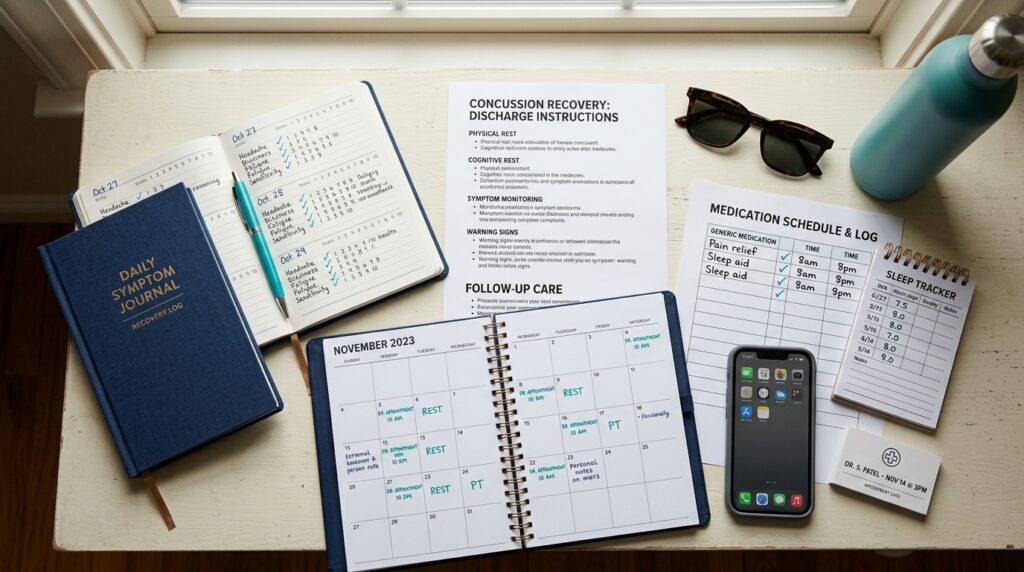
Recovery varies. Many people improve within days or weeks, while some symptoms last longer. The goal is not prolonged isolation in a dark room or an immediate return to a full schedule. Follow individualized medical advice, use a short period of relative rest when directed, and gradually increase activity without pushing through a meaningful symptom flare.
Return Gradually and Document Ongoing Effects
Manage work, school, driving, exercise, and follow-up
During the first days, reduce activities that significantly worsen symptoms. Short walks, calm conversation, simple household tasks, or limited reading may be reasonable when tolerated. If an activity causes a clear increase in headache, dizziness, nausea, fogginess, or fatigue, stop or reduce it and discuss the pattern with the treating professional.
Ask for written accommodations when work or school is difficult. Temporary changes may include shorter days, additional breaks, reduced screen exposure, a quieter setting, more time for assignments, lighter physical duties, or postponement of safety-sensitive tasks. Someone operating machinery, working at height, driving commercially, or making rapid high-stakes decisions may need stricter restrictions than someone completing flexible desk work.
Driving requires attention, vision, reaction time, judgment, and the ability to turn the head comfortably. Do not resume driving merely because the vehicle is available or a few hours have passed. Ask the healthcare professional when driving is appropriate, particularly when dizziness, slowed processing, vision problems, fatigue, medication effects, or poor concentration remain.
Avoid activities that create another risk of head impact while symptoms are present. Athletes should not return to play on the day of a suspected concussion and should follow a medically supervised step-by-step progression. The same principle applies to cycling, skating, climbing, contact recreation, and hazardous work. A second injury before recovery can have serious consequences.
Track symptoms once or twice daily without checking constantly. Record sleep, headaches, dizziness, nausea, light or noise sensitivity, concentration, mood, physical activity, screen use, missed work, and help needed with daily tasks. Keep the record factual. Use Injory’s injury documentation guide to organize medical records, photographs, expenses, and communications after a fall or crash.
Arrange follow-up when symptoms worsen, fail to improve, interfere with normal activities, or return as activity increases. A healthcare professional may recommend a concussion specialist, neurologist, rehabilitation provider, vestibular therapist, vision specialist, or other clinician based on the symptoms. Mental-health support may also help when anxiety, sadness, irritability, or fear of another accident becomes difficult to manage.
For related information, visit Injory’s brain, spine and orthopedic injury guides, recovery and rehabilitation library, and e-bike and e-scooter crash guide. These resources can help readers prepare questions, preserve records, and plan safer next steps without attempting to diagnose an injury online.
A possible concussion deserves attention even when the fall or crash appeared minor. Watch for symptoms that emerge later, act immediately on danger signs, obtain an appropriate medical assessment, and follow a gradual return plan. Clear documentation and timely follow-up can make it easier to recognize setbacks and communicate accurately with healthcare, school, workplace, insurance, or legal professionals.
This article provides general educational information and is not a diagnosis or a substitute for medical care. Call emergency services for danger signs or rapidly worsening symptoms. Treatment, testing, activity restrictions, and recovery plans must be individualized by a qualified healthcare professional.