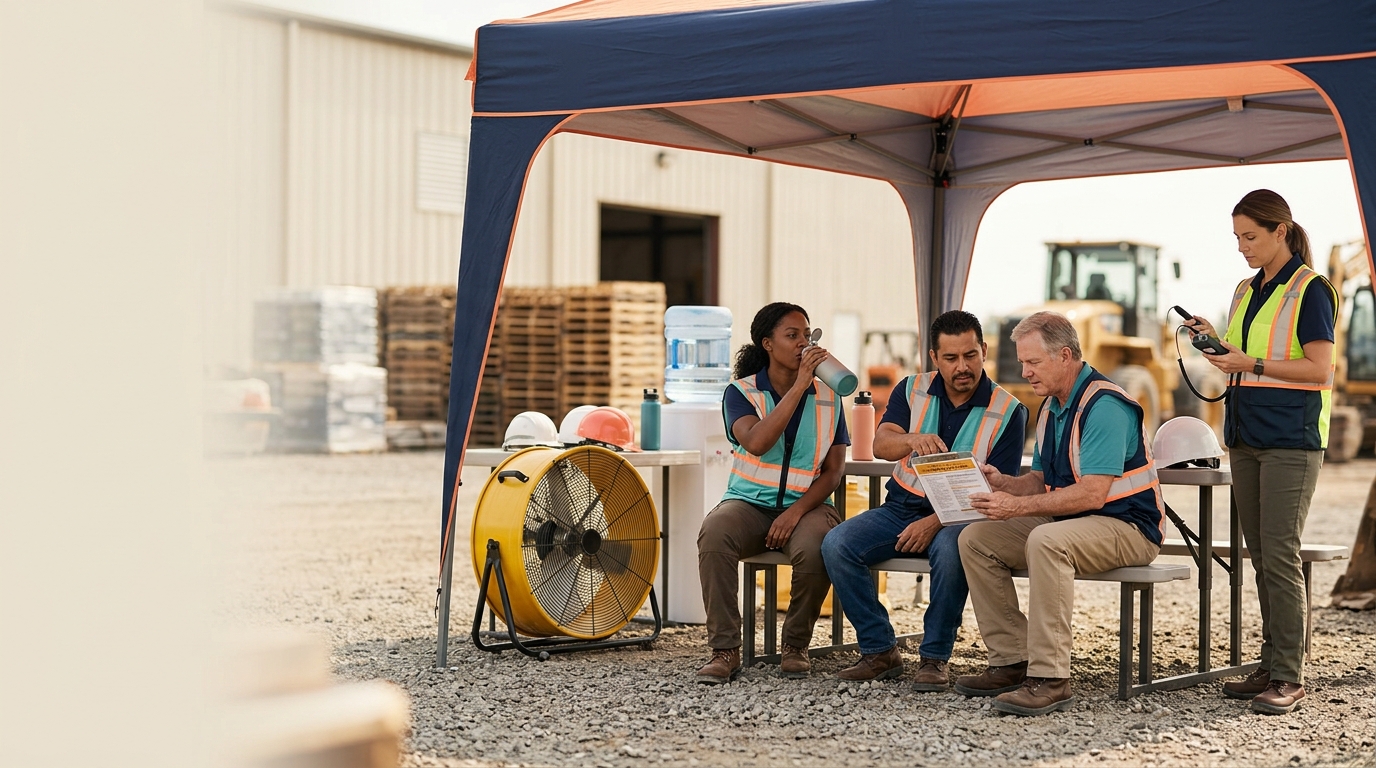
Risk can rise during a heat wave, but dangerous exposure can also develop on an ordinary day when a worker is new to the job, returns after time away, performs unusually heavy work, wears restrictive personal protective equipment, or cannot take adequate water and recovery breaks. Heat can also contribute to falls, equipment errors, poor judgment, and vehicle incidents before a worker recognizes a medical emergency.
In April 2026, the Occupational Safety and Health Administration updated its National Emphasis Program for outdoor and indoor heat-related hazards. OSHA continues to describe heat illness and heat-related deaths as preventable. The practical lesson for workers and employers is straightforward: identify heat risk early, respond immediately to symptoms, preserve accurate records, and build prevention into daily operations rather than waiting for someone to collapse.
Emergency warning: Confusion, fainting, seizures, loss of consciousness, abnormal behavior, or suspected heat stroke requires immediate emergency help. Call emergency services, move the person to a cooler area, and begin rapid cooling while help is on the way. Do not leave the worker alone.
Recognize Heat Illness and Respond Before It Becomes an Emergency

Heat stress develops when the combined demands of temperature, humidity, radiant heat, clothing, and physical work exceed the body’s ability to release heat. The air temperature alone does not tell the whole story. A humid warehouse, direct sun, hot machinery, limited airflow, heavy lifting, and impermeable protective gear can create serious risk even when a weather app does not show an extreme number.
Know the Difference Between Early Symptoms and Heat Stroke
Watch for heat exhaustion, cramps, fainting, rash, and rhabdomyolysis
Heat exhaustion may involve heavy sweating, headache, dizziness, weakness, irritability, nausea, thirst, elevated body temperature, reduced urine output, or difficulty concentrating. Heat cramps can cause painful muscle spasms after heavy work and sweating. Syncope may cause light-headedness or fainting, particularly after standing for long periods or rising suddenly. Rash commonly appears as irritated clusters of small bumps in areas where sweat remains trapped.
Another serious condition, rhabdomyolysis, can occur when muscle tissue breaks down after intense exertion or heat stress. Warning signs may include severe muscle pain, unusual weakness, swelling, or dark urine. A worker with those symptoms needs prompt medical evaluation. Do not assume that severe pain is simply normal soreness from a difficult shift.
A worker does not need to diagnose the exact illness before acting. Stop the exposure, move to a cool or shaded place, notify a trained responder, loosen unnecessary clothing, cool the skin, and obtain medical help when symptoms are severe or worsening.
Treat suspected heat stroke as a life-threatening emergency
Heat stroke can affect the brain and other organs. Confusion, slurred speech, loss of coordination, irrational behavior, collapse, seizure, or unconsciousness are critical warning signs. A person with heat stroke may be sweating heavily or may have hot, dry skin; the presence or absence of sweat should not determine whether emergency action is taken.
Call emergency services immediately and clearly state that heat stroke is suspected. Move the worker away from the heat and begin rapid cooling. Depending on available resources and responder training, cooling may include cold-water immersion, wetting the clothing and skin, applying ice or cold wet towels, and circulating air around the person. Continue cooling until emergency professionals take over. Do not force fluids into someone who is confused, vomiting, having a seizure, or not fully alert.
A buddy system matters because heat can impair judgment. A confused worker may insist that nothing is wrong or try to continue working. Supervisors and coworkers should activate the emergency plan without waiting for the affected person to agree.
Document the Exposure, Response, and Medical Effects
Preserve worksite conditions and a factual timeline
After urgent care is addressed, record what happened while details remain fresh. Note the date, shift, job task, location, start and stop times, estimated workload, clothing or protective equipment, access to water, rest breaks, shade or cooling areas, ventilation, and whether the worker was new, recently returned, or assigned heavier work than usual.
Save weather records, heat-index readings, wet-bulb globe temperature measurements when used, indoor temperature logs, production schedules, timecards, break records, training materials, safety messages, and photographs of the work area. Record heat sources such as ovens, roofing materials, asphalt, steam, engines, or enclosed equipment. Identify witnesses and anyone who observed symptoms, requested a break, provided first aid, called emergency services, or directed the worker to continue or stop working.
Keep copies of the incident report, emergency response record, ambulance documentation, medical notes, work restrictions, prescriptions, bills, and follow-up instructions. Maintain a daily symptom log covering headaches, dizziness, fatigue, sleep, concentration, muscle pain, urine changes, and activities the worker cannot perform. Use Injory’s injury documentation guide to organize photographs, communications, medical records, and expenses in one place.
Documentation should be accurate and complete. Do not exaggerate symptoms or guess at measurements that were never taken. Preserve original texts, emails, photographs, and files with their dates and metadata. Workers should also review applicable reporting procedures and local deadlines, which differ by jurisdiction.
Prevent Heat Illness Through Planning, Controls, and Acclimatization
A bottle of water and a poster are not a complete heat-safety program. Prevention requires an assessment of the actual job, including environmental heat, workload, shift length, protective clothing, worker experience, health-related limitations, and the effectiveness of existing controls. The plan should cover both outdoor and indoor heat because enclosed or poorly ventilated spaces can remain hazardous after outdoor temperatures begin to fall.
Build Heat Protection Into the Workday
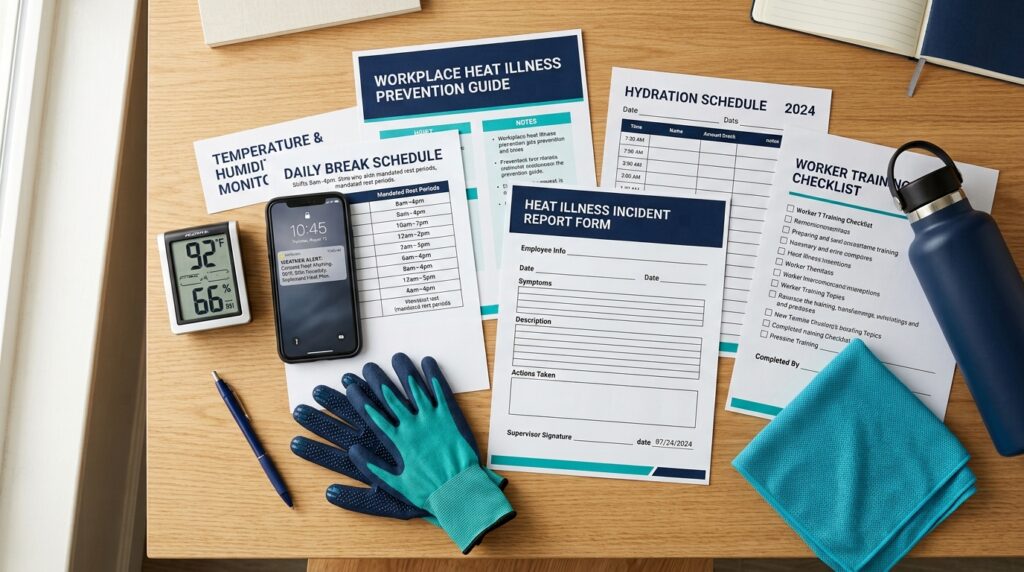
Employers should first consider engineering controls that reduce heat at its source or separate workers from it. Examples include air conditioning, fans when appropriate, local exhaust ventilation, reflective barriers, insulation around hot surfaces, cooled operator booths, mechanical lifting devices, and processes that reduce steam or humidity. Fans may not provide adequate protection in every high-heat condition, so controls should be selected through a competent hazard assessment.
Administrative controls can reduce the dose of heat a worker receives. Schedule heavier tasks for cooler periods, rotate demanding work, increase staffing, shorten exposure periods, provide cool recovery areas, and increase the frequency and length of rest breaks as conditions worsen. Cool drinking water should be readily accessible, and workers should be encouraged to drink regularly rather than waiting until they feel intensely thirsty. Workers with medical fluid restrictions should follow individualized clinical advice.
New and returning workers need gradual exposure so their bodies can acclimatize. OSHA and NIOSH emphasize that workers who have not recently performed physical work in hot environments face greater risk during their first days. Supervisors should reduce initial heat exposure, increase it progressively, and monitor workers closely during the first one to two weeks. Acclimatization can be lost after time away, illness, or a major change in conditions.
Training should be understandable to the workforce and completed before hazardous exposure. It should cover symptoms, first aid, emergency contacts, worksite location details for responders, cooling methods, hydration, acclimatization, high-risk tasks, and the rule that no symptomatic worker is left alone. Employees should be able to report symptoms and request a break without retaliation or pressure to protect production targets.
Use controls, water, rest, cooling, training, and gradual exposure
Use the OSHA heat exposure resource center for current prevention guidance, educational materials, and regulatory updates. Weather and heat-index tools can support planning, but employers should also account for radiant heat, humidity, workload, clothing, and indoor conditions that a general forecast may miss.
Workers can support prevention by arriving rested, using provided water and recovery areas, watching coworkers, reporting faulty ventilation, and speaking up when symptoms begin. Medication, pregnancy, recent illness, and some medical conditions can affect heat tolerance; questions about individual risk belong with a qualified healthcare professional.
Explore more prevention information in Injory’s workplace injury library. Workers recovering from a heat-related event can also use the recovery and rehabilitation section to prepare for follow-up appointments, work restrictions, and a safe return to activity.
Workplace heat illness is often predictable. A strong response begins before the hottest hour of the day: assess the job, reduce exposure, acclimatize new and returning workers, make water and cooling breaks practical, train everyone to recognize symptoms, and prepare a rapid emergency response. When an incident occurs, immediate care comes first, followed by accurate documentation and qualified medical or legal guidance when the consequences are serious.
This article provides general educational information and is not medical, legal, employment, or occupational-safety advice. Emergency symptoms require immediate professional help. Workplace requirements, reporting duties, workers’ compensation rules, and heat standards vary by jurisdiction.