Halloween pedestrian safety 2026 deserves extra attention as families, teenagers, partygoers, and drivers share neighborhood streets after dark. October is Pedestrian Safety Month in the United States, and the National Highway Traffic Safety Administration is also preparing Halloween impaired-driving campaigns for the final week of the month. That makes early October a useful time to review how pedestrian crashes happen, how to reduce risk, and what information matters if someone is struck by a vehicle.
Pedestrian injuries can happen wherever people and vehicles mix. Halloween adds unusual conditions: children may move unpredictably, costumes can reduce visibility, and drivers may face heavier foot traffic after dark.
This guide explains practical prevention steps, warning signs after an impact, and evidence to preserve after a pedestrian crash. It is educational information only. Call emergency services for serious injuries and seek qualified medical or legal guidance for advice about a specific situation.
Why Halloween Pedestrian Safety 2026 Matters
The risk is not limited to children. Adults walking to parties, teenagers moving between neighborhoods, parents accompanying trick-or-treaters, delivery workers, and people crossing parking lots can all be exposed to traffic. The National Highway Traffic Safety Administration identifies October as Pedestrian Safety Month and schedules additional Halloween messaging focused on impaired driving later in the month.
Long-term research also shows why Halloween deserves attention. A study using decades of U.S. fatal-crash data found a higher pedestrian fatality rate on Halloween evenings than on comparison evenings. Older CDC research found a marked increase in child pedestrian deaths during Halloween hours. The takeaway is simple: expect more complicated nighttime traffic on October 31.
Why October Nights Can Become More Dangerous for Pedestrians
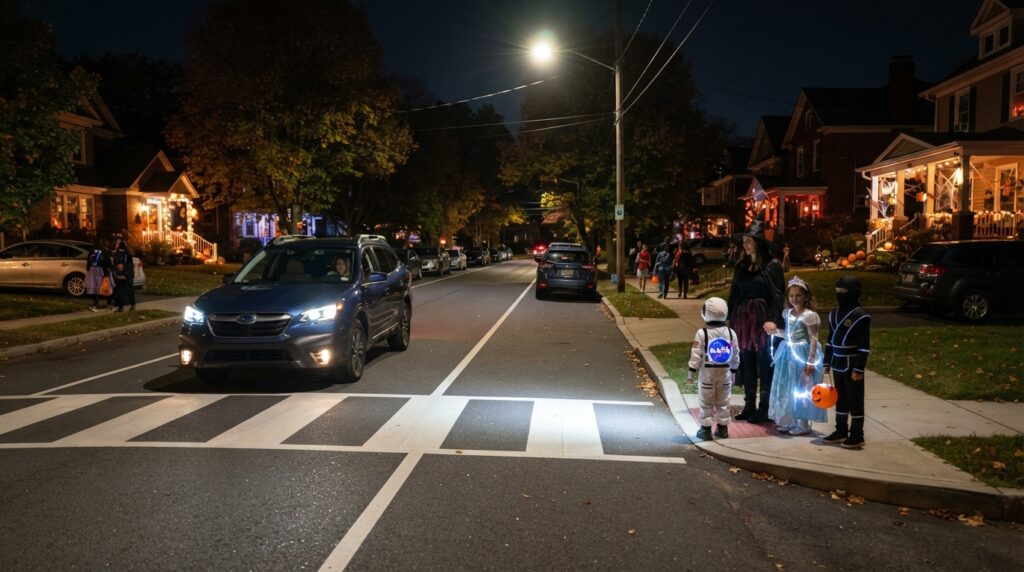
Pedestrian crashes often involve several factors at once, such as poor visibility, distraction, speed, or a pedestrian entering the road from behind a parked vehicle. Halloween can combine several of those risks.
Children may focus on friends or decorations instead of traffic. Adults may be checking directions or supervising several children. Drivers may also face glare, rain, wet pavement, and parked vehicles that hide shorter pedestrians.
Visibility, Costumes, Crossings, and Parked Vehicles
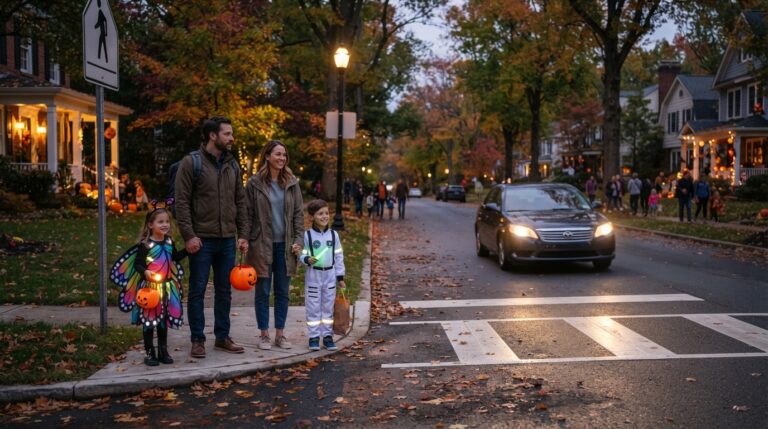
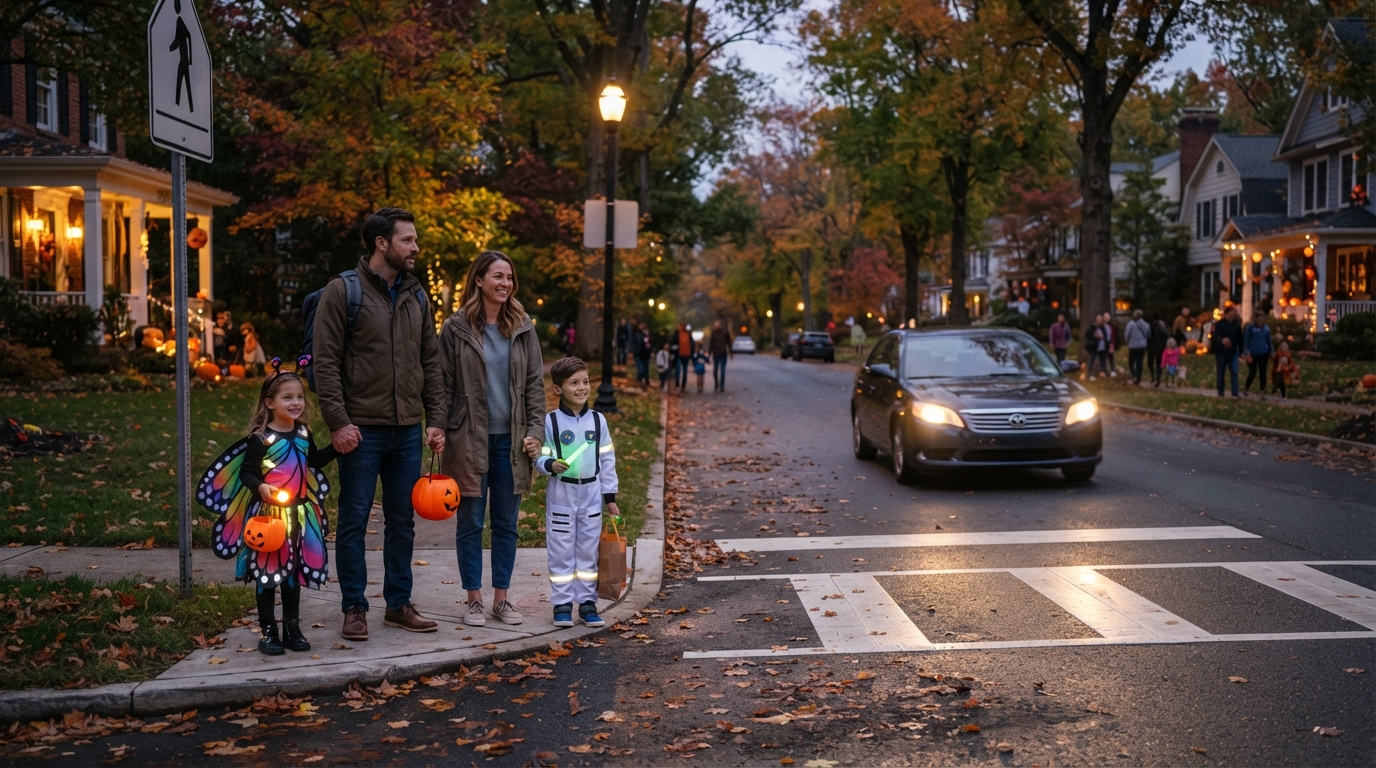
Dark costumes can blend into the background. Masks, hats, or props may reduce peripheral vision. Long clothing can create a tripping hazard, especially when a child moves quickly across a curb or uneven sidewalk. Reflective material, lights, and flashlights can improve visibility, but they do not replace careful street crossing.
Pedestrians should use sidewalks when available and cross at predictable locations whenever possible. Before crossing, look in every direction and make sure approaching drivers are slowing or stopped. Avoid stepping into the street from between parked cars, large SUVs, vans, landscaping, or decorations that block sightlines.
Parents can plan a route before leaving home. Younger children should stay close to an adult near traffic, while older children should know the route, return time, and safe crossing rules.
Drivers Need More Time and Space on Halloween Night
Drivers should treat busy residential streets as low-speed environments even when the posted limit is higher than conditions safely allow. Scan sidewalks, driveways, medians, parked cars, and the edges of the roadway. A child may appear from a place where a driver normally would not expect a pedestrian.
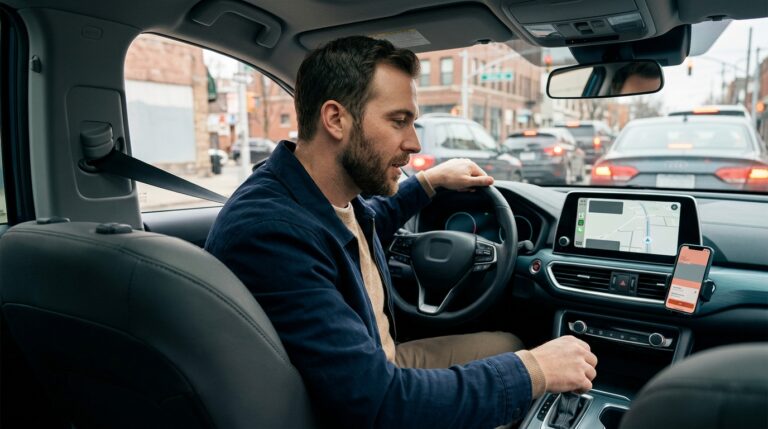
Put the phone away before the vehicle moves. Set navigation and music while parked. Injory’s distracted driving guide explains how phones, dashboard screens, and other distractions can affect crash risk and the evidence left behind.
Alcohol and drugs can also affect judgment, reaction time, speed control, and visual attention. If you plan to drink or use an impairing substance, arrange a sober driver, rideshare, taxi, public transportation, or a place to stay before the event begins. Never assume that a short neighborhood drive is harmless because the distance is small.
Common Injuries After a Pedestrian Impact
A pedestrian does not have the protective structure of a vehicle around the body. Even a collision that appears minor can transfer significant force. Injuries may involve the head, face, neck, spine, chest, abdomen, pelvis, arms, knees, ankles, or feet. A person can also suffer a secondary impact after being knocked to the pavement.
Some injuries are obvious, while others develop over hours. Adrenaline can temporarily mask pain, so symptoms and the force of the crash both matter.
Head Injury and Other Warning Signs Should Not Be Ignored
Call emergency services for loss of consciousness, severe or worsening headache, repeated vomiting, seizure activity, increasing confusion, unusual behavior, weakness, numbness, difficulty breathing, severe bleeding, major deformity, or intense neck, back, chest, abdominal, or pelvic pain. Do not force someone to stand or walk when a serious head, spine, hip, or leg injury is possible.
A concussion can occur even without a direct visible wound. Headache, dizziness, nausea, light sensitivity, memory difficulty, slowed thinking, irritability, sleep changes, and unusual fatigue can appear later. Injory’s concussion warning-sign guide explains symptoms that deserve closer attention after a fall or collision.
The CDC’s pedestrian safety guidance notes that thousands of pedestrians are killed on U.S. roads each year and that speed, location, vehicle size, and alcohol are important risk factors. Prevention matters, but prompt medical evaluation also matters when an impact has already occurred.
What to Do After a Halloween Pedestrian Crash
After a collision, focus first on safety and medical needs. Move out of active traffic only if it is safe to do so. Use hazard lights or flashlights to warn approaching vehicles, and call 911 when anyone may be seriously hurt.
Do not argue about fault at the roadside. Lighting, speed, distraction, vehicle technology, road design, and sight obstructions may need review later. Stick to factual observations instead of guesses.
Document the Scene, Injuries, and Electronic Evidence
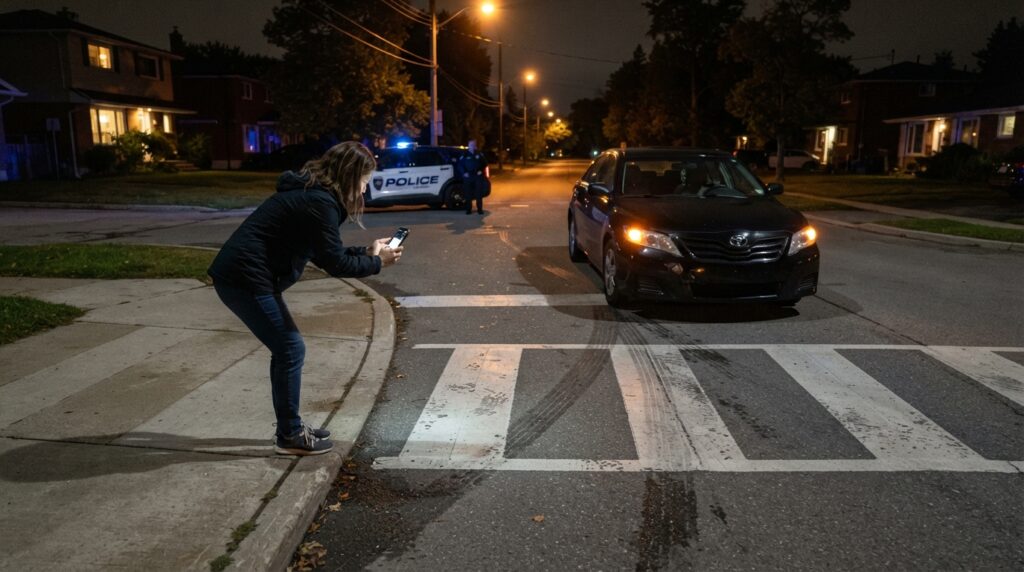
If it is safe, photograph the overall scene before vehicles or objects move. Capture the crosswalk, lane markings, traffic signals, streetlights, parked vehicles, driveways, signs, skid marks, debris, decorations, vegetation, and any obstruction that affected visibility. Take wide photos that show relationships between objects, then closer images of damage, clothing, shoes, personal items, and visible injuries.
Collect the driver’s name, contact information, insurance information, license plate, and vehicle details. Ask witnesses for their names and contact information. Note nearby homes, businesses, buses, doorbell cameras, security cameras, dashcams, or traffic cameras. Video may be overwritten quickly, so identifying possible sources early can be important.
If a phone or vehicle screen may have played a role, preserve rather than alter the data. Do not delete messages, reset devices, update software, clear navigation history, or repair a vehicle simply to make the evidence easier to understand. Injory’s driver-assistance crash evidence guide explains why dashboard warnings, vehicle data, software state, and third-party records can matter after a modern collision.
Preserve Records Without Turning Assumptions Into Facts
Create one folder for crash records. Save the report number, medical instructions, bills, prescriptions, photographs, property estimates, transportation costs, missed-work information, insurer correspondence, and a short timeline. Keep a simple symptom log as well.
Keep original files whenever possible. Do not crop, filter, or repeatedly resave the only copy of an important photograph or video. If a damaged phone, wearable device, or vehicle may contain useful data, ask a qualified professional before resetting or disposing of it. Technical records can be misunderstood when viewed without context.
Be careful with social media. Posting a confident theory about speed, distraction, intoxication, or fault can create confusion later if the available evidence changes. Likewise, do not delete existing posts or messages merely because a claim may follow. Laws about evidence preservation, privacy, insurance, and deadlines vary by jurisdiction.
Medical recovery should remain the priority. Follow discharge instructions, attend recommended appointments, and seek additional care if symptoms worsen. Discuss persistent physical or emotional symptoms with an appropriate healthcare professional.
Halloween pedestrian safety 2026
Should be memorable for costumes and community, not a preventable traffic injury. Halloween pedestrian safety 2026 starts with predictable behavior: slower driving, sober transportation, visible pedestrians, careful crossings, active supervision, and phones put away. If a crash does occur, address urgent injuries first, document what can safely be preserved, and avoid turning uncertain details into conclusions.
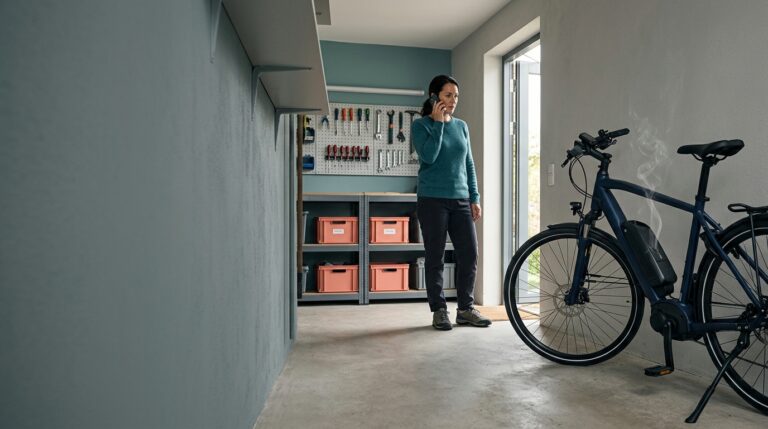
For more practical road-injury guidance, review Injory’s e-bike and e-scooter accident guide, which covers many of the same scene-documentation and recovery principles for vulnerable road users.
This article provides general educational information and is not medical, legal, insurance, or accident-reconstruction advice. Call emergency services for urgent injuries. Laws, reporting requirements, insurance rules, and filing deadlines vary by location, so consult qualified professionals for advice about your circumstances.